Table of Contents
This blog will explore a range of zen rock garden ideas and other inspirational design concepts to help you transform any area of your home into a peaceful retreat. Discover how these gardens not only create pathways through their layout but also symbolize the pathway toward inner peace and wellbeing.
What Is a Zen Garden?
A zen garden is a minimalist outdoor space designed for meditation and reflection. Originating from Japanese culture, zen gardens emphasize traditional practices, simplicity, and harmony.
Unlike lush, flower-filled gardens, a Japanese zen garden relies on textures, shapes, and carefully arranged components to inspire calm and mindfulness. Common elements of the Japanese zen garden typically include:
- Gravel and sand: Represent water and are raked into calming patterns.
- Rocks and stones: Symbolize mountains or islands, adding structure and focus.
- Plants: Include moss, shrubs, or bamboo, chosen for their simplicity.
- Water features: Provide soothing sounds and symbolize flow.
- Paths and borders: Guide movement and frame the space beautifully.
Inspiring Zen Garden Ideas
Creating your own zen garden promotes opportunities for relaxation and mindfulness. Whether you have space for a mini zen garden or want to transform a larger area with zen rock garden ideas, there are many creative ways to bring tranquility into your environment.
1. Embrace Karesansui
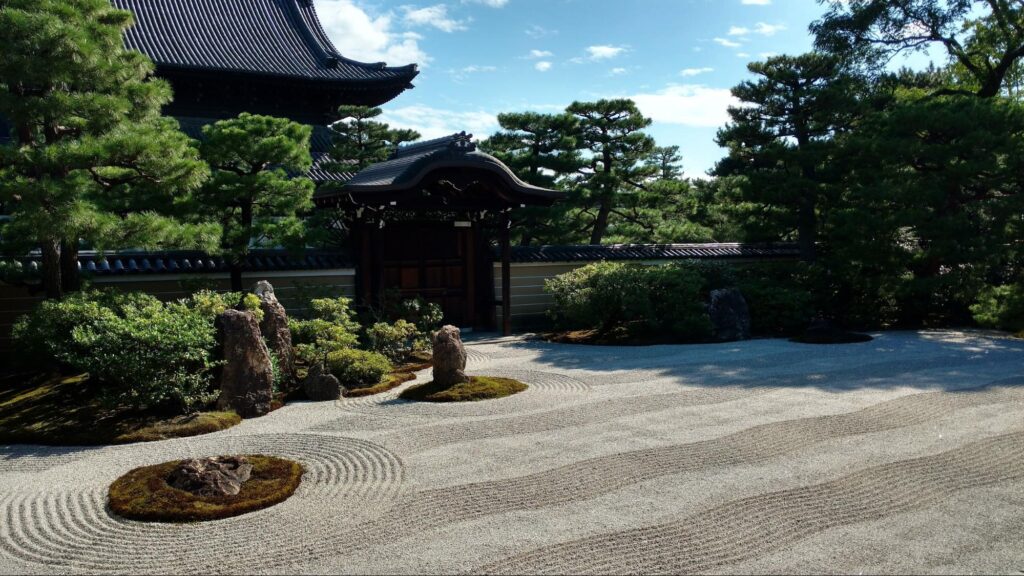
The most iconic style of zen gardens is Karesansui, which is a dry rock garden. These spaces use raked gravel or sand to symbolize water, creating wave-like patterns that evoke rivers or oceans. Carefully placed rocks represent islands or mountains, inviting you to reflect on the simplicity and balance of nature.
A zen sand garden, characteristic of the Karesansui, focuses on minimalism and encourages mindfulness as you rake the element, a meditative practice in itself. These traditional gardens emphasize tranquility and provide a serene escape, even in small spaces, making them perfect for personal reflection.
2. Play With Geometric Patterns
Consider designing your zen garden using geometric patterns to create a sense of structure and harmony. Rake the sand or gravel into circles around rocks to symbolize ripples in water, or use straight, parallel lines for a clean and calming effect.
Arrange rocks in triangular formations to represent mountains or islands, while pathways can follow rectangular or square shapes to guide movement. Geometric designs add balance and visual appeal, helping you create a peaceful space that reflects both creativity and mindfulness. Have fun experimenting and finding patterns that resonate with you.
3. Install LED Lighting
For a contemporary twist on your zen garden, add LED lighting beneath floating decks, pathways, or water features. Soft, subtle lighting highlights your garden’s elements and creates a serene atmosphere after sunset. You can illuminate raked patterns in the sand, cast shadows from rocks, or draw attention to plants or borders.
This modern approach enhances nighttime tranquility and lets you enjoy your garden in a whole new way. LED lights are energy-efficient, making them perfect for sustainable home designs and practical choices for your peaceful retreat.
4. Create a Desk Zen Garden
If space is limited, you can bring the tranquility of a zen garden indoors with a mini-zen garden. Set it up on your desk using a shallow tray filled with sand, small rocks, and a tiny rake to create patterns. Add a few small plants or figurines for a personal touch.
Taking short breaks to rake the sand or rearrange the elements can reduce stress and boost your focus. This compact, calming addition to your workspace helps you stay productive while fostering a sense of mindfulness.
5. Build an Indoor Corner Zen Garden
Another perfect spot to create an indoor zen garden is an unused corner of your home. Start by placing a shallow tray filled with sand or fine gravel. Add a few carefully selected rocks and incorporate minimalist plants like moss or small succulents for a touch of greenery.
Additionally, consider adding a small water feature or a bamboo fountain to enhance the serene atmosphere. This quiet nook provides an area for meditation, bringing the calming benefits of a zen garden into your living space.
6. Install a Water Feature
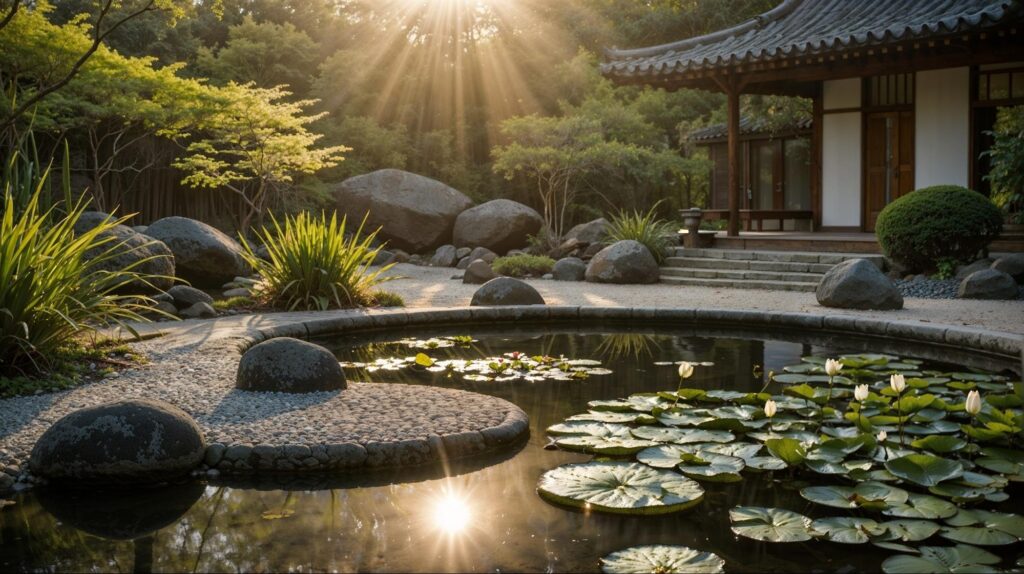
Incorporating water features into your zen garden adds another soothing element to the space. A small fountain creates calming sounds as the water gently flows, promoting relaxation. If you have more room, consider a koi pond, which brings beauty and tranquility with its vibrant fish and natural movement.
For a more subtle touch, a creek or stream can be created using a narrow water channel, offering a peaceful trickling sound. Whatever you choose, the gentle flow of water enhances the serene atmosphere and supports peacefulness in your garden.
7. Decorate with Lanterns
Lanterns create a serene environment and bring a soft glow to your zen garden after dark. There are different lantern options to choose from depending on your desired look. Traditional lanterns, in stone or wood, can be placed along pathways or near water features to create a gentle light that enhances the calming vibe.
Hanging lanterns are another great option, adding depth and a touch of elegance to your garden. The gentle light they emit highlights key features like plants or rocks, making your space feel even more inviting and tranquil at night.
8. Add Moss
Moss is a great addition to your zen garden as it offers a soft, natural texture that contrasts beautifully with rocks and sand. Place moss around stones or along borders to create lush green patches that invite you to pause and appreciate nature. Moss thrives in shaded areas, making it ideal for spots with less direct sunlight.
Beyond its aesthetic appeal, moss symbolizes tranquility and resilience, bringing more peaceful vibes into your garden. Its low-maintenance nature also makes it a practical choice for creating a serene, natural environment.
9. Install a Pavilion or Gazebo
Pavilions and gazebos are common features in Japanese zen gardens. These structures, often made of wood or bamboo, provide a sheltered area where you can immerse yourself in the surrounding nature.
If you have the space, incorporating a pavilion or gazebo into your zen garden creates a dedicated meditation zone. The simplicity of these structures enhances the tranquil atmosphere, inviting you to slow down and enjoy the calm of your zen sand garden.
10. Put Up Bamboo Fencing
Bamboo is a popular element in zen gardens because of its natural beauty, strength, and calming qualities. You can incorporate bamboo in various ways. For example, consider adding bamboo fencing to create a sense of privacy or placing bamboo plants around the garden.
Ultimately, a bamboo fence defines your garden’s borders, offering a rustic yet elegant touch that complements the simplicity of zen design. Its rustling sound in the wind also enhances the peaceful ambiance.
Wrapping Up: The Best Zen Garden Ideas
Zen gardens embody the beauty of simplicity and balance. Whether you include elements like raked gravel in a zen sand garden or explore zen rock garden ideas with thoughtfully placed stones, each feature contributes to overall harmony. By adding plants, water features, and meaningful design elements, you can transform any space into a tranquil oasis.
If you’re inspired by Japanese design principles, SHAWOOD offers custom-built homes that integrate these timeless concepts. Our homes reflect the same tranquility and simplicity found in zen gardens, creating spaces where you can feel connected to nature and enjoy peaceful living. Embrace the beauty of zen in your home and garden, and create a sanctuary that nurtures your well-being.
Frequently Asked Questions

What are the benefits of Zen gardens?
Zen gardens offer many benefits that help enhance your well-being and create a peaceful environment. Here are some key advantages:
- Reduces stress: The calming design and natural elements help you unwind.
- Encourages mindfulness: Raking the sand or arranging stones fosters focus and presence.
- Low maintenance: They require minimal care, making them perfect for busy lifestyles.
- Promotes creativity: Designing your zen garden sparks inspiration and fresh ideas.
- Eco-friendly: Zen gardens use natural, sustainable materials, making them gentle on the environment.
Which plants are best for zen gardens?
As you begin to choose plants for your zen garden, focus on simplicity and natural beauty. Here are some great options:
- Bonsai trees: Symbolize harmony and patience, perfect for small spaces.
- Japanese maple trees: Their delicate leaves add a serene, colorful touch.
- Moss: Soft and lush, it provides a calm, textured contrast to rocks.
- Bamboo: Graceful and minimalist, bamboo adds height and movement.
- Small shrubs: Low-maintenance and simple, they provide subtle greenery.
What is the symbolism behind elements in a zen garden?
In zen gardens, each element holds deep symbolism. Sand or gravel represents water or vast space, creating a sense of flow and openness. Rocks symbolize mountains or islands, grounding the garden with stability and strength. Furthermore, moss and plants represent life, vitality, and renewal, adding a touch of nature’s cycle.

Rachel Sewell